Assisting enterprises in learning, exploring, reengineering, and implementing component-based/object-oriented software solutions using best-in-class methods.
|
|
|
|
System Interactions (Use Cases) Top level requirements are collected during an interactive facilitated session with the key stakeholders. Here, the starting point is a discussion of the high-level events that cause a stakeholder to interact with (use) the system. This approach is conducted in non-technical, business-oriented terms. An interaction is a system level (external) request of a user (an External Agent, Actor, or another system) and the system or domain that is under analysis. This interaction is often depicted at the context level of the system. 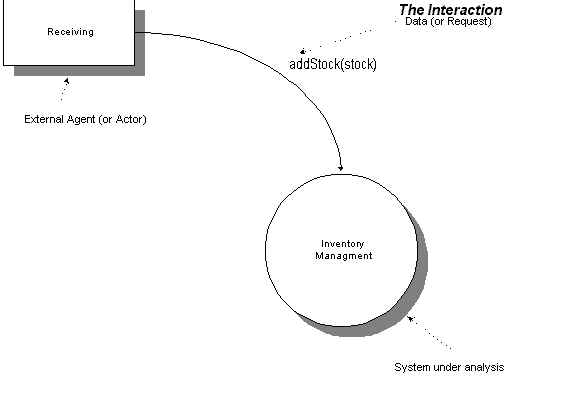
A popular framework that has become accepted in capturing the details of the interaction is called an operation schema. This non-technical approach provides an easy mechanism to work with customers to fully articulate their requirements. The operation schema assists in documenting the features of a process. One variation of a layout for this best-in-class technique is provided below:
|
Send mail to smarcus@MarcusSoftwareDesigns.com with questions or
comments about this web site.
|