|
1
|
- The Customer Is Always Wrong
- The gap between the business requirements and the systems that enable
them.
|
|
2
|
|
|
3
|
- You have a Customer table with an attribute called ‘LastName’!
- You have a Contact table with an attribute called ‘LastName’!
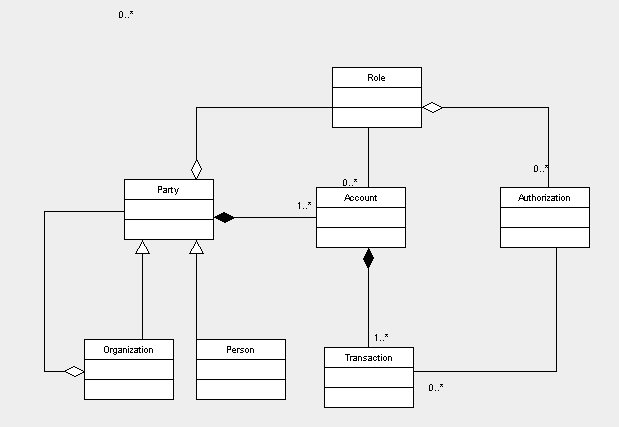
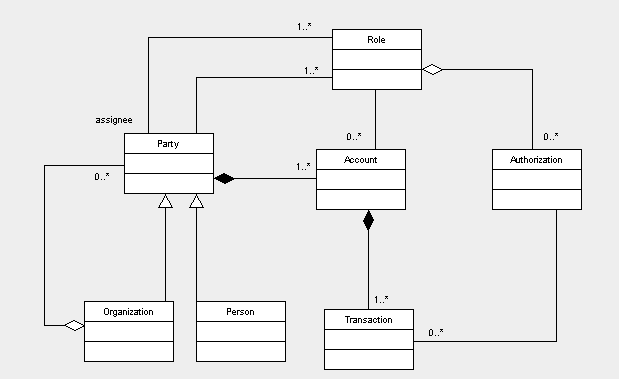
- You have a Member table with an attribute called ‘LastName’!
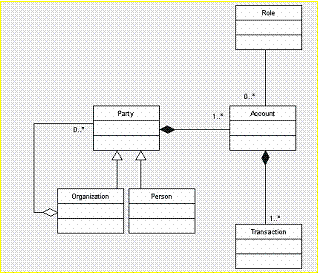
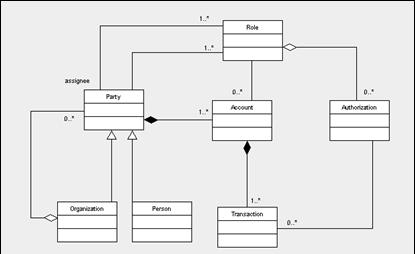
- And so on…
|
|
4
|
- Business Baggage (confusing what and how)
- Paving Cow Paths (automating ancient paradigms)
- Confusing Syntax with Semantics – examples of bad syntax, e.g.
- a Customer, a Member, an Issue,
a Security
- ROOT PROBLEM: We confuse WHOM we have a relationship WITH the
relationship
|
|
5
|
- “..a person tends to see the world as conforming to the words he has
been taught to use about it."
- Alfred Korzybski
|
|
6
|
- Customer
- Client
- Member
- Contact
- Security
- Asset
- Issue
|
|
7
|
- Customer?
- Member?
- Client?
- Contact?
|
|
8
|
- Customer?
- Client?
- Member?
- Contact?
|
|
9
|
- Maximize Customer Satisfaction
- Maximize Share value
|
|
10
|
- Ask a bunch of different users from different parts of the organization
to define ‘customer’!
|
|
11
|
|
|
12
|
- To Marketing, the Customer could be end-users
- e.g. Field the help-desks, perform focus groups, determine market
desires and needs
- To Sales, the Customer could be channels
- e.g. Arrange relationships and price structures through intermediaries
or directly to individuals
- To Manufacturing, the Customer could be sub-contractors
- e.g. Arrange relationships with internal and external developers
- To Purchasing, the Customer could be Vendors
- e.g. Arrange for least cost resources; quick turnaround, etc.
|
|
13
|
- Business terms are highly contextual and those terms change in
situations, e.g. Customer and User
- System terms are generalized to accommodate several contexts and
situations, e.g. Person and Transaction
|
|
14
|
- Language is our tool for communicating.
- Business: Human to Human; Human to Human Interface (GUI)
- System: Human Interface to System
|
|
15
|
- Situation specific – even within the same application
- Many applications ‘evolved’ using role relationships as people and
organizations
- Poor decision support; have to resort to complex and error-prone data
‘scrubbing’
- Brittle applications
|
|
16
|
- We know ‘who’ things are based on relationships
- Relationships define context
- Relationships define what People and Organizations are, i.e. their Role
- Business does not measure People or Organizations – it measures the relationship
|
|
17
|
- From a stripped down business
point of view, we have some Party, a Person or Organization, that wishes
to collaborate with another Party, a Person or Organization, to engage
in a business activity that results in a transaction.
|
|
18
|
- The THING we use to measure a relationship is called an ‘Account’.
- The Account is the object that provides a context for the relationship.
- Actually, the Account IS the relationship. Its fundamental function is
to aggregate all of the events that transpire between the measurer role
and consumer role within the relationship. That is, the Account relates
to every transaction with the measured.
|
|
19
|
|
|
20
|
- Provides the context for an Account.
- Establishes the scope of transactions.
- Provides contexts for other Roles.
|
|
21
|
|
|
22
|
|
|
23
|
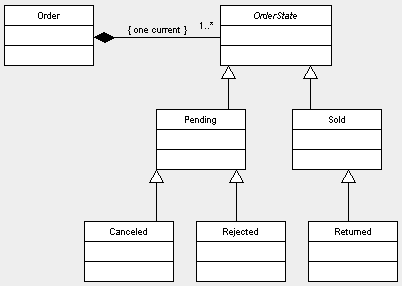
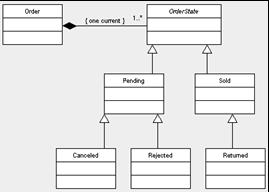
- Roles and States are similar.
- Both reflect the ‘situation’ a thing is in.
- e.g. Order may be similar to Person as an Entity
- An Order could play the ‘role’ of (or be in the state of) “Pending”,
“Sold”, “Rejected”, “Returned”, etc.
|
|
24
|
|
|
25
|
|
|
26
|
- "In the work on General Semantics we wanted to preserve the term semantics
because of its international character and its general applicability. As
we are interested in the relation of words and facts, etc., I introduced
the term General Semantics to indicate a general theory of values, a general
theory of evaluation of facts, relations, 'feelings', etc., not of
meaning by mere verbal definition. In General Semantics we are
interested in actual evaluational reactions and not only what we say
about them."
- Alfred Korzybski
|
|
27
|
- Language, Information, Ex-formation
- Business Culture
- Mimicry
|
|
28
|
- Certain business terminology should not find its way as fundamental
entities.
- The underlying form that we care about are relationships. That is,
relationships define status.
- A fundamental relationship object is an aggregator that we can call an
Account. (You can call it anything you want.)
- Although the Customer is always wrong, that relationship is King!
|
|
29
|
- Science and Sanity 5th Edition, Korzybski, A., Institute of
General Semantics, 1994
- Design Patterns, Gamma, E. et al., Addison Wesley, 1995
- Account Pattern, Marcus, S. -
http://www.marcussoftwaredesigns.com/AccountPattern.htm
- Analysis Patterns, Fowler, M., Addison Wesley, 1997
- The User Illusion, Nrettranders, T., Viking Press, 1998
|
|
30
|
- Steve Marcus
- Marcus Software Designs, Inc.
- www.MarcusSoftwareDesigns.com
|

 Notes
Notes